Business Insights to Guide Long Term Strategy
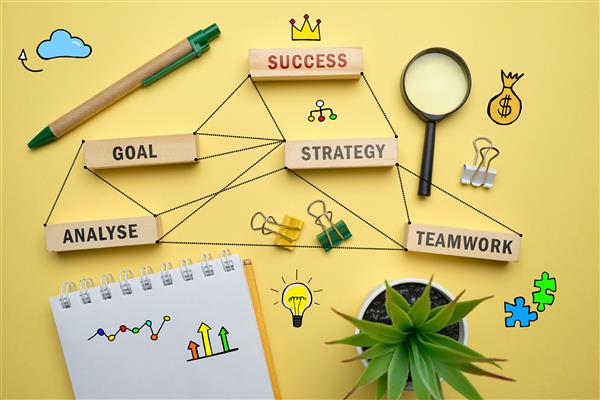
In an era of accelerating change, long term strategy demands more than reactive decision-making. It requires a nuanced comprehension of market trajectories, technological evolution, and organizational capability. By leveraging business insights, companies can anticipate disruptions, identify growth inflection points, and craft plans that endure beyond short-term fluctuations. These insights provide a framework to align resources, talent, and operations with strategic objectives that unfold over years rather than quarters.
Analyzing Market Trajectories
Strategic foresight begins with a meticulous understanding of market dynamics. Evaluating trends, consumer behavior, and emerging technologies reveals potential growth vectors and latent risks. Scenario analysis and predictive modeling enable leaders to visualize multiple possible futures. This intelligence allows organizations to calibrate investments and initiatives in ways that reinforce long term strategy, rather than chasing ephemeral opportunities.
Assessing Core Competencies
A robust strategy is grounded in internal strengths. Identifying core competencies illuminates areas where an organization can achieve sustained differentiation. Capability mapping, process audits, and talent assessments reveal unique advantages that can be leveraged to fortify market positioning. Simultaneously, recognizing gaps informs targeted capability development, ensuring that organizational resources are invested where they yield the greatest strategic return.
Integrating Competitive Intelligence
Understanding competitors is integral to shaping long term strategy. Beyond surface-level benchmarking, deep competitive intelligence examines innovation pipelines, operational efficiencies, and strategic intent. Recognizing rivals’ strengths and vulnerabilities allows for anticipatory moves that preempt threats and exploit opportunities. Companies that decode the competitive landscape with sophistication gain a strategic edge that compounds over time.
Embedding Strategic Flexibility
Flexibility is essential for sustainability. While a long term strategy provides direction, it must accommodate evolving conditions. Modular planning, phased initiatives, and adaptive governance structures allow organizations to pivot when necessary without undermining overall objectives. Strategic elasticity transforms uncertainty into an opportunity for refinement and growth, ensuring that plans remain relevant in dynamic environments.
Leveraging Data-Driven Insights
Data is a cornerstone of informed decision-making. Analytics spanning market trends, operational performance, and customer behavior provide empirical grounding for strategic initiatives. Integrating qualitative intelligence with quantitative metrics ensures a comprehensive perspective. Organizations that operationalize data insights can identify high-impact opportunities, mitigate emerging risks, and align tactical actions with overarching long term strategy.
Prioritizing Innovation
Sustained growth depends on continual innovation. Research and development, process improvement, and business model experimentation create avenues for differentiation and resilience. Embedding innovation as a core component of long term strategy ensures that organizations remain competitive, responsive, and forward-looking. Iterative development cycles, informed by market insights, enable companies to refine offerings while preserving alignment with strategic objectives.
Talent and Leadership Alignment
Human capital underpins the execution of any strategic plan. Aligning leadership vision, employee competencies, and organizational culture with long term strategy ensures coherent execution. Continuous learning, leadership development programs, and cross-functional collaboration cultivate a workforce capable of sustaining performance across extended time horizons. Talent strategies that complement strategic goals amplify organizational agility and resilience.
Financial and Resource Planning
Sustainable strategy requires meticulous financial and resource management. Capital allocation, cost optimization, and investment prioritization must be harmonized with strategic imperatives. Financial modeling, scenario analysis, and resource forecasting allow organizations to anticipate funding requirements and ensure operational continuity. When resources are aligned with strategic objectives, initiatives are executed efficiently and with maximal impact.
Monitoring and Adapting to External Forces
External conditions, from regulatory shifts to technological breakthroughs, influence long term strategy profoundly. Continuous environmental scanning, horizon scanning, and trend analysis enable organizations to anticipate disruptions and adapt proactively. Strategic review cycles, informed by evolving intelligence, create mechanisms for recalibration that preserve alignment between goals and context.
Embedding Sustainability and Ethical Considerations
Modern strategy extends beyond profitability. Environmental stewardship, social responsibility, and ethical governance are integral to enduring competitive advantage. Incorporating sustainability into long term strategy not only mitigates risks but also enhances reputation, stakeholder trust, and long-term viability. Responsible practices create alignment between organizational objectives and societal expectations, reinforcing strategic legitimacy.
Feedback Loops and Continuous Learning
Continuous feedback transforms experience into intelligence. Lessons from operational performance, market outcomes, and customer engagement inform strategy refinement. Organizations that embed iterative learning loops maintain relevance, optimize execution, and enhance predictive accuracy. This dynamic approach ensures that long term strategy evolves in step with changing conditions, preserving alignment and sustaining growth.
Aligning Vision and Execution
Ultimately, strategy succeeds when vision and execution converge. Every initiative, investment, and operational decision should reinforce the overarching long term strategy. By integrating market insights, internal capabilities, and external intelligence into cohesive plans, organizations can navigate complexity with confidence, optimize outcomes, and create durable competitive advantage.